The Estate's Oldest Residents
The trees at Caistor Hall have been here far longer than any building on the estate. As custodians, caring for them and understanding them is part of caring for the place itself.
Meet a few of the residents here — some have stood for centuries, others are just 10 years old.
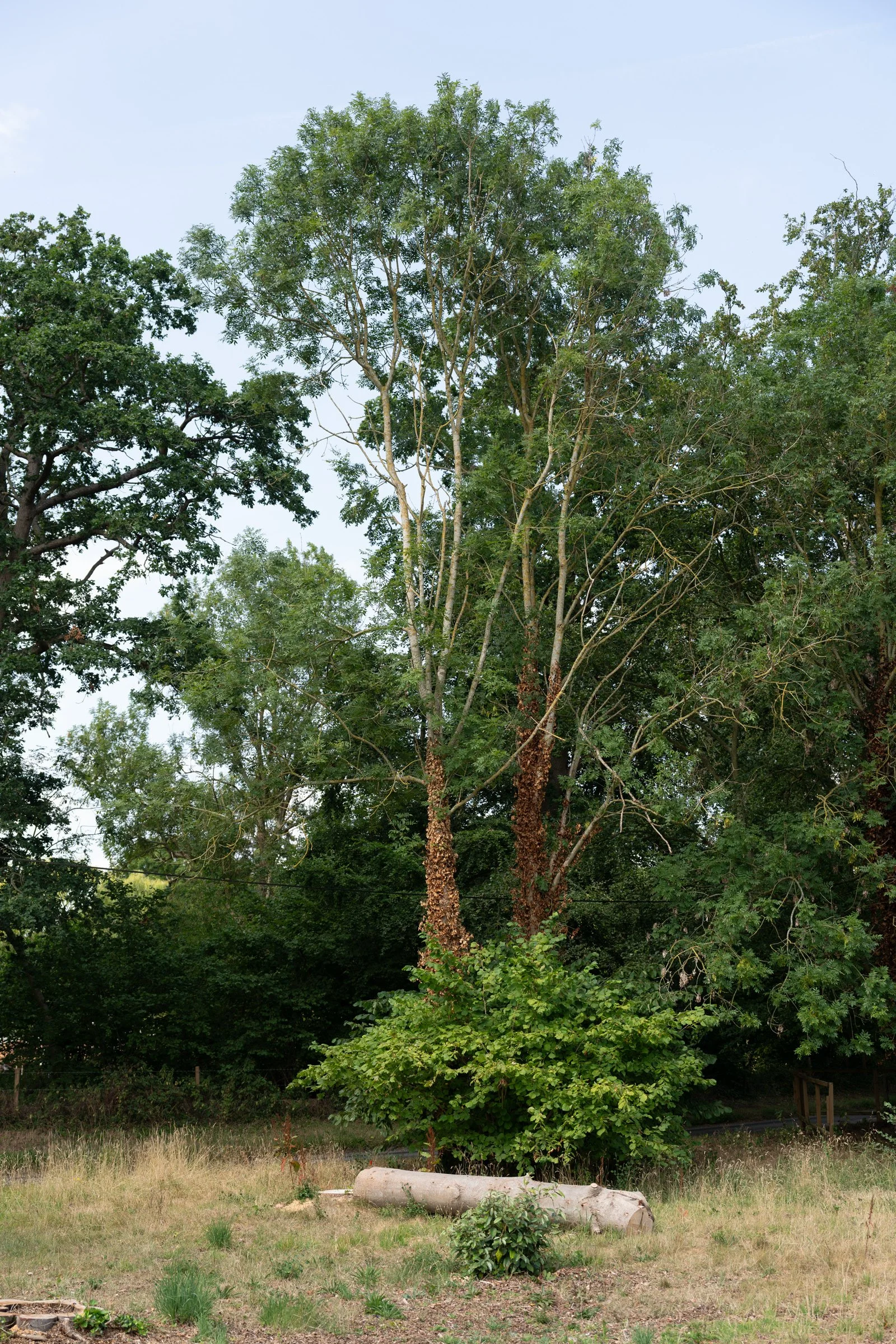
Ash
Fraxinus excelsior
One of Britain's most common and best-loved native trees. Its compound leaves, black winter buds, and pale furrowed bark make it distinctive in any season. Mature specimens like this one are becoming increasingly rare — ash dieback, a fungal disease now spreading widely across the UK, means trees of this age and size are worth paying attention to.
Estimated age: 25 years | Height: approximately 16m
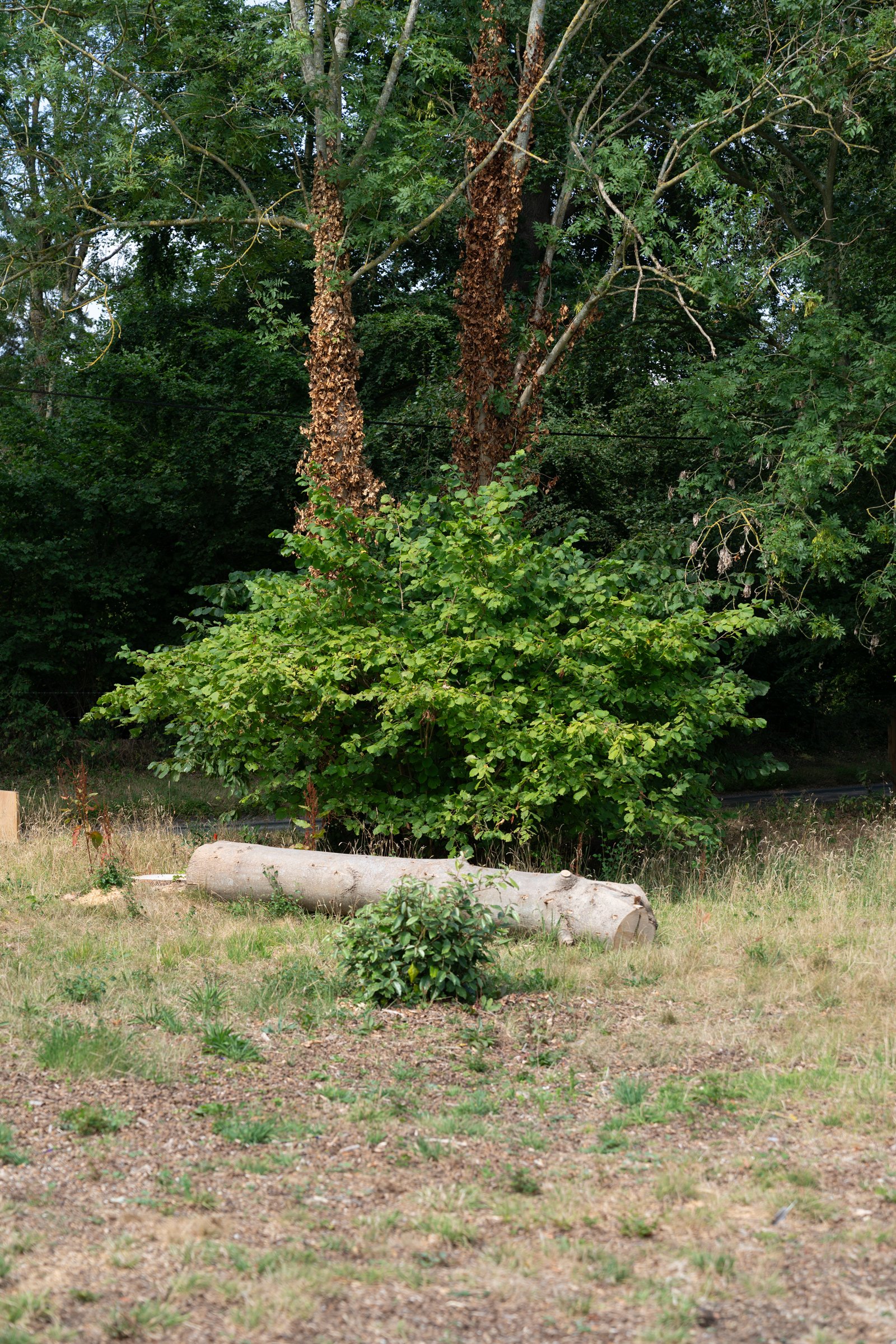
Hazel
Corylus avellana
Hazel is a natural understory tree — it grows happily in the shelter of larger trees, which is exactly where you'll find this one, beneath the ash. One of the earliest signs of spring on the estate: its yellow catkins appear before almost anything else. In autumn, its nuts feed the dormice, squirrels, and woodpeckers that share the grounds.
Estimated age: 10 years | Height: approximately 3.5m
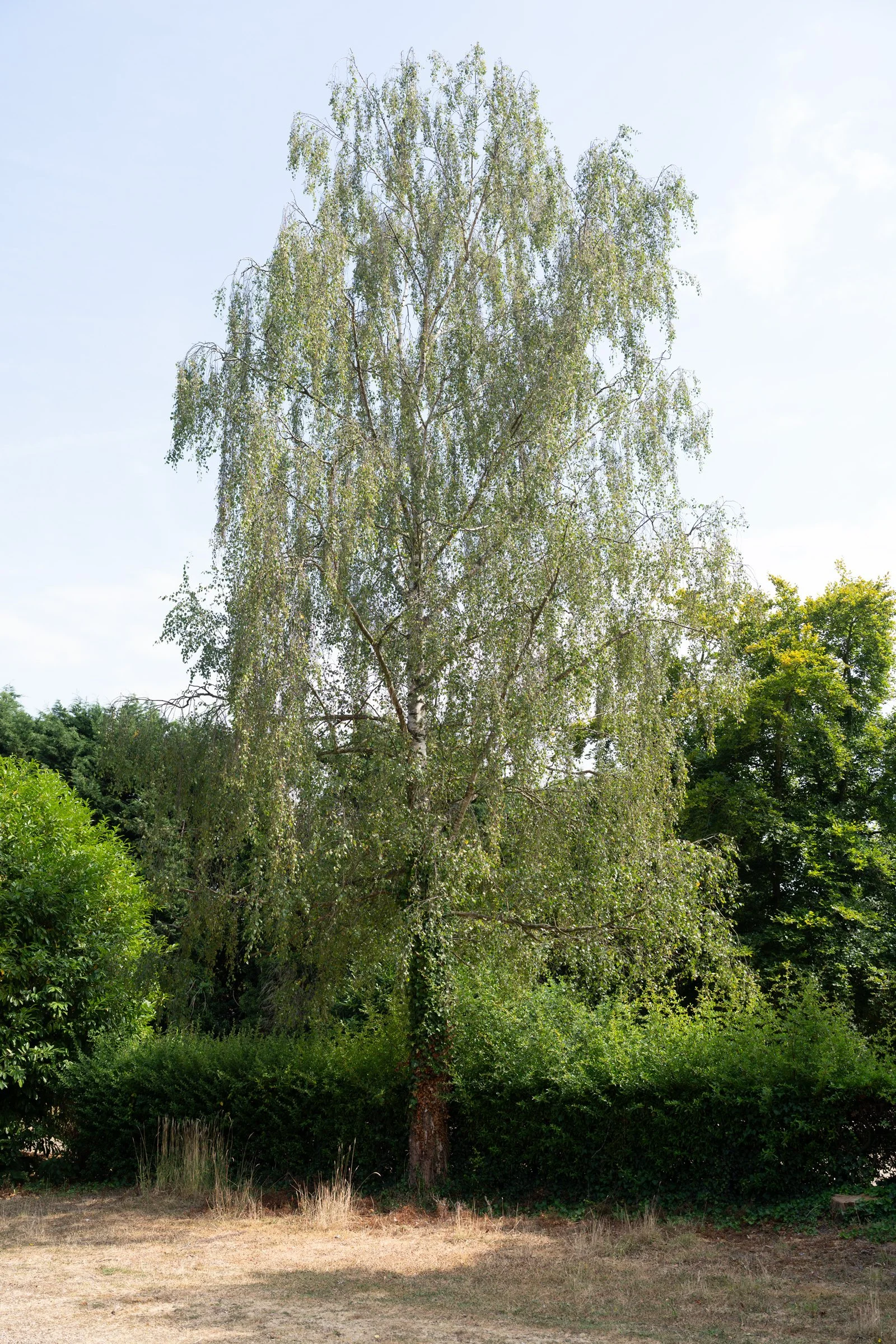
Silver Birch
Betula pendula
Few trees catch light quite like a silver birch. Its white peeling bark, fine pendulous branches, and small triangular leaves give it an almost luminous quality, particularly in winter when it stands bare against a grey sky. A pioneer species, birch is often the first tree to colonise open ground — quick to establish, generous to wildlife. Its canopy is light enough to let wildflowers grow beneath it, and its catkins, seeds, and dead wood support hundreds of species of insects, birds, and fungi. Short-lived compared to oak or yew, but no less valuable for it.
Estimated age: 25 years | Height: approximately 14m
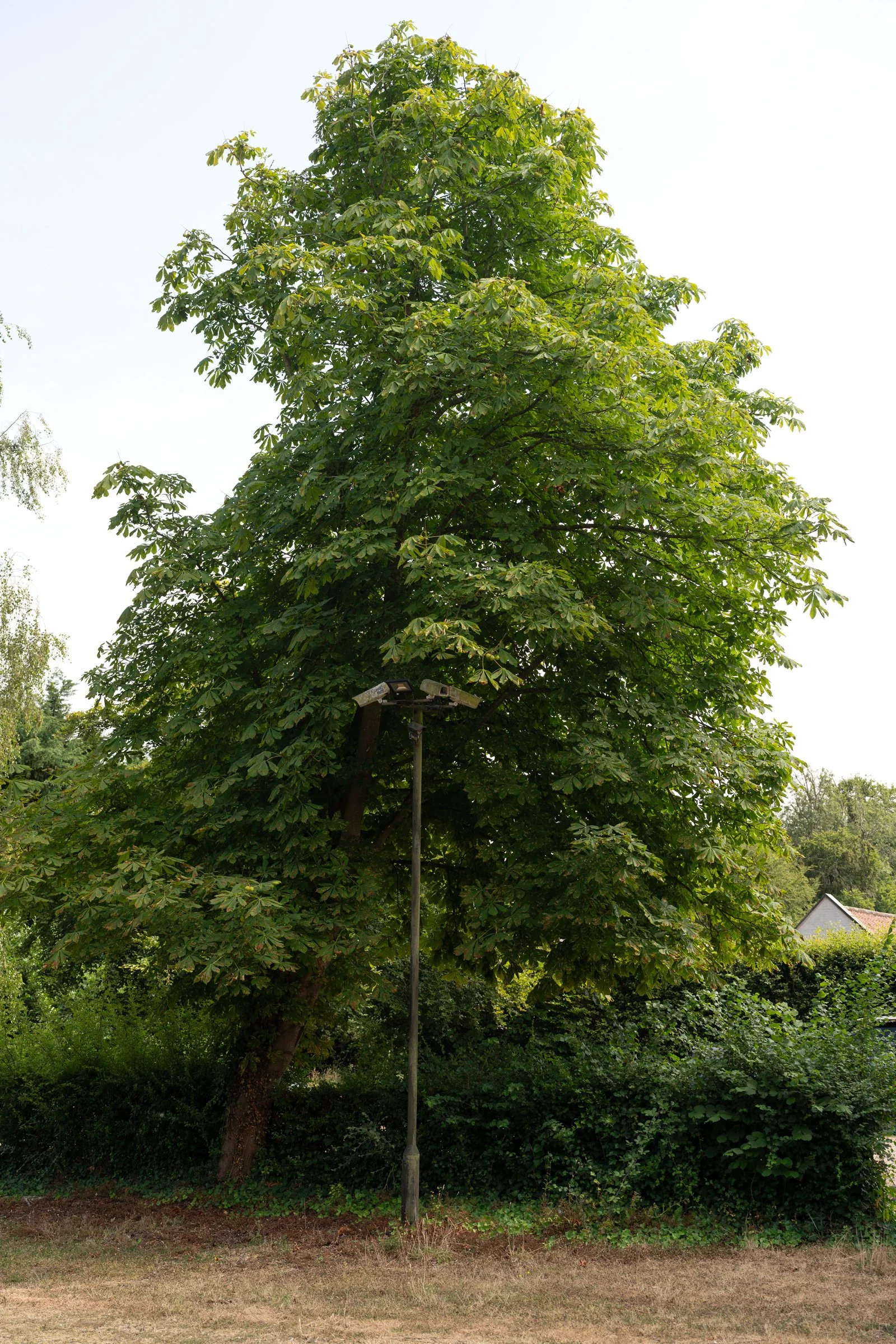
Horse Chestnut
Aesculus hippocastanum
A tree of grand avenues and village greens, the horse chestnut announces itself twice a year: first in May, when it erupts into candles of white and pink blossom, and again in autumn, when its glossy conkers drop in their spiky cases. Despite being so familiar, it is not a British native — it arrived from the Balkans in the late 16th century and was planted widely across estates like this one for its ornamental qualities. Today, many mature specimens are under pressure from leaf miner moth and bleeding canker disease, making older trees increasingly worth preserving.
Estimated age: 25 years | Height: approximately 13m
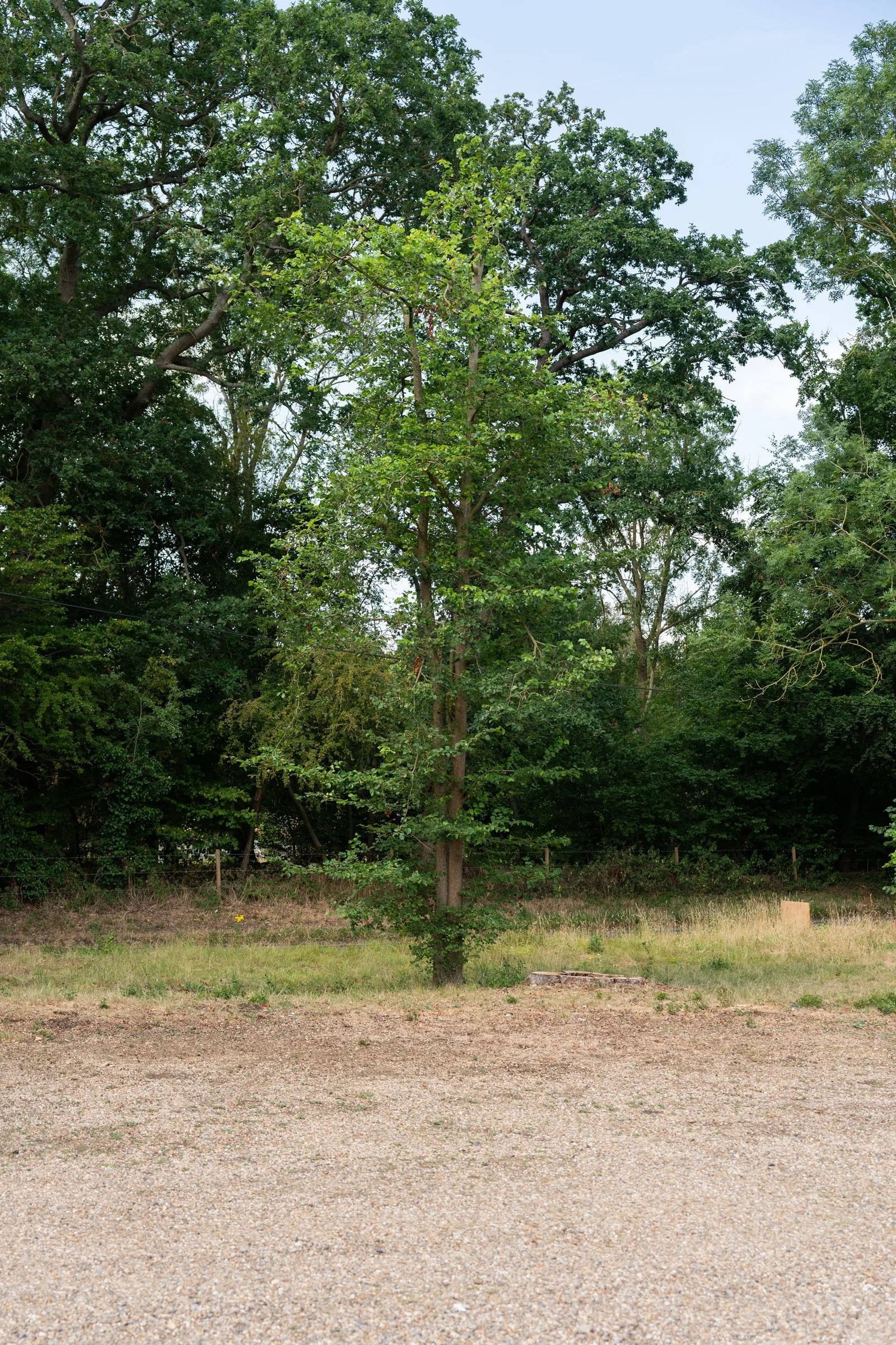
Elm
Ulmus
The elm was once one of the defining trees of the English landscape — lining lanes, sheltering farmsteads, punctuating hedgerows for miles in every direction. Dutch elm disease killed an estimated 25 million of them and transformed the countryside almost beyond recognition. To find one growing at all is now genuinely rare.
This specimen is approximately fifteen years old and still finding its feet. It will not stop you in your tracks — not yet. But its presence here matters more than its size, and with time and good fortune, it may yet become something extraordinary.
Estimated age: 15 years | Height: approximately 10m
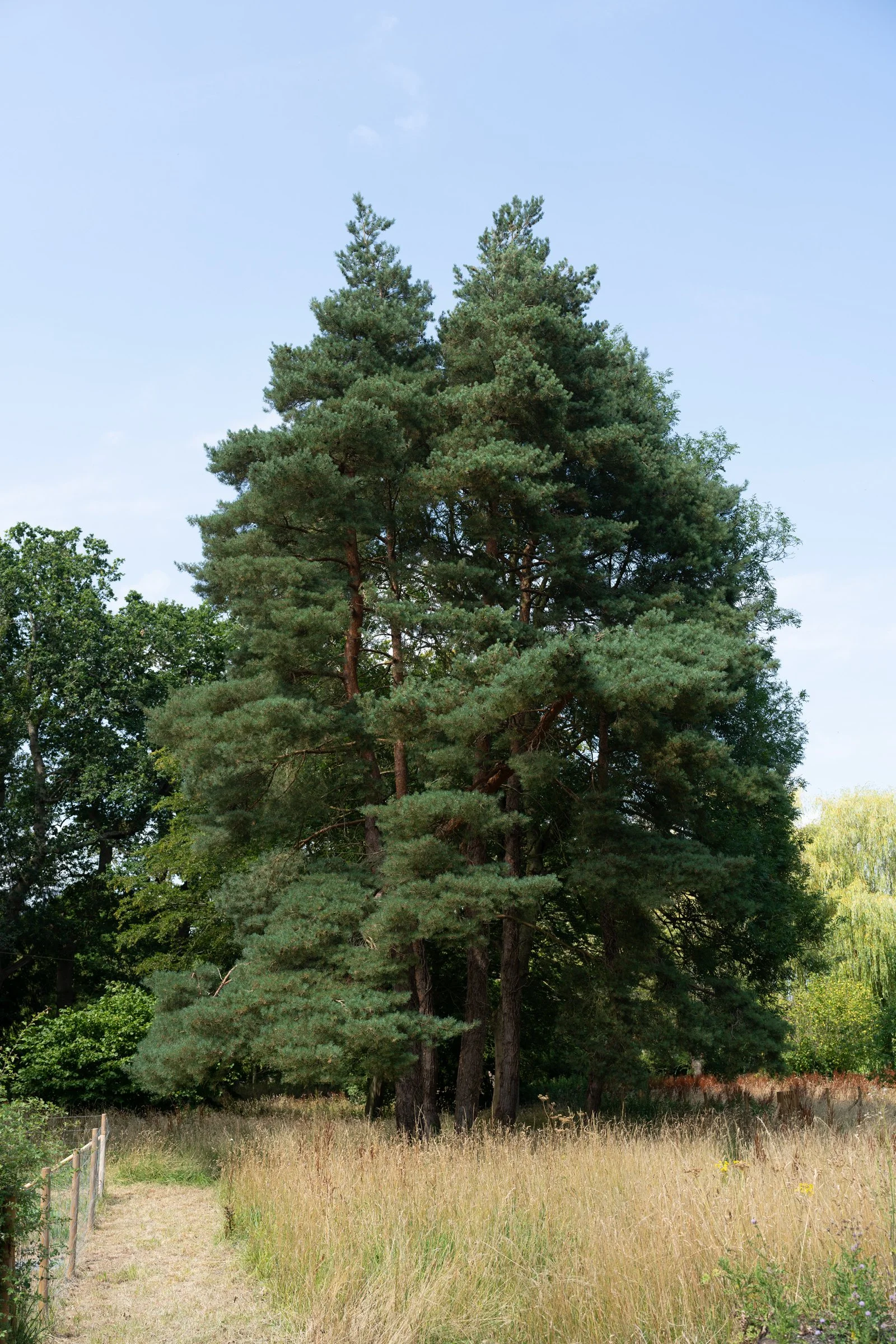
Scots Pine (Group of)
Pinus sylvestris
Scotland's only truly native pine, and one of the oldest tree species in Britain. This group would have been planted — Scots pines were a common choice on estates from the 18th century onwards, used as landmarks, wind shelter, and ornamental planting, particularly on sandy or acid soils. Their rust-coloured upper bark, flat-topped silhouettes, and the particular quality of light that filters through their canopy make them instantly recognisable. Old groups like this one provide nesting habitat for crossbills, siskins, and sparrowhawks, and their fallen needles create a quiet, specific world underneath — copper-coloured, soft-floored, and largely its own.
Estimated age: 50 years | Height: approximately 18m
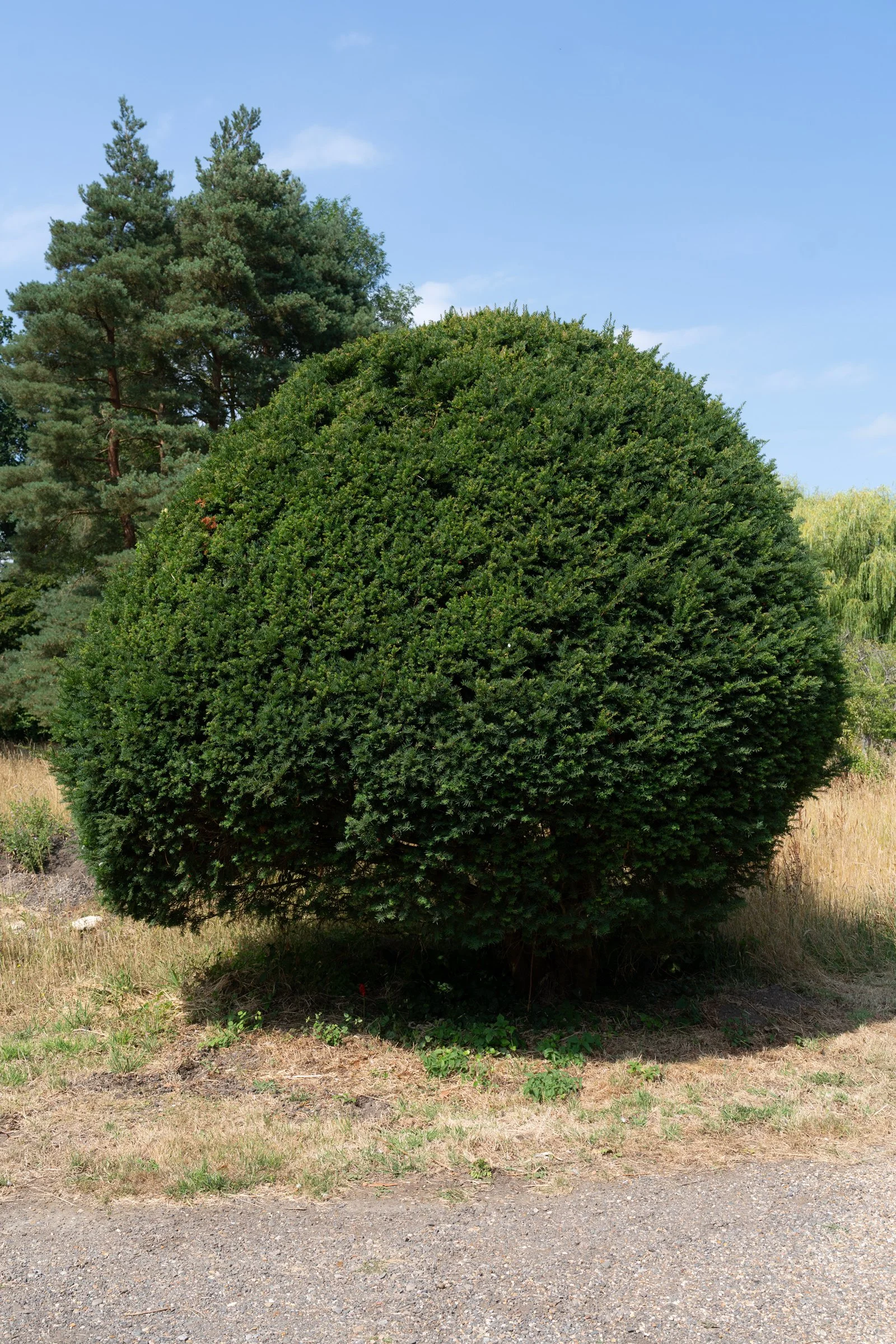
Yew
Taxus baccata
No native British tree lives longer, and few carry more history. Yews can survive for thousands of years — outlasting the buildings, walls, and people around them — and this one, even if relatively modest in age, belongs to a lineage that predates most of what we think of as ancient. Every part of the tree except the red berry flesh is toxic, which has fed centuries of folklore around death and resurrection. Slow-growing and dense, it provides some of the best nesting cover for birds of any tree on the estate, and its berries are a vital late-autumn food source for thrushes and waxwings.
Estimated age: 50 years | Height: approximately 5m
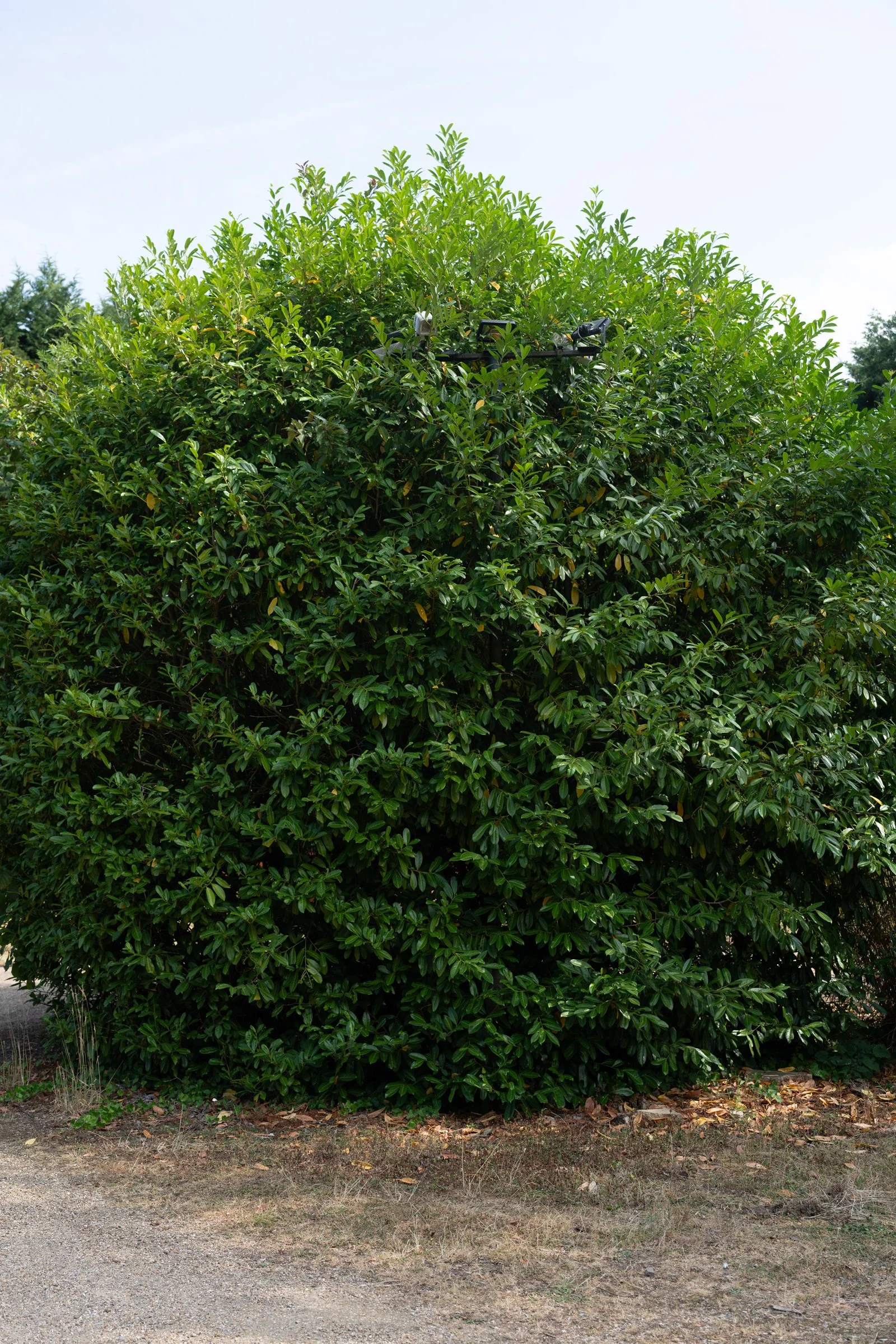
Laurel
Prunus laurocerasus
Cherry laurel is one of those plants that arrived as a Victorian garden favourite and quietly became a problem. Introduced from southeastern Europe and western Asia, it spreads readily, tolerates deep shade, and suppresses almost everything beneath it — which is precisely why it was planted so widely as game cover and estate underplanting. As a single specimen it is handsome enough, with its glossy evergreen leaves and racemes of white spring blossom. But where it escapes into woodland it can crowd out native flora almost entirely. Its management across the estate is worth considering alongside any wider rewilding or woodland improvement work.
Estimated age: 25 years | Height: approximately 6m
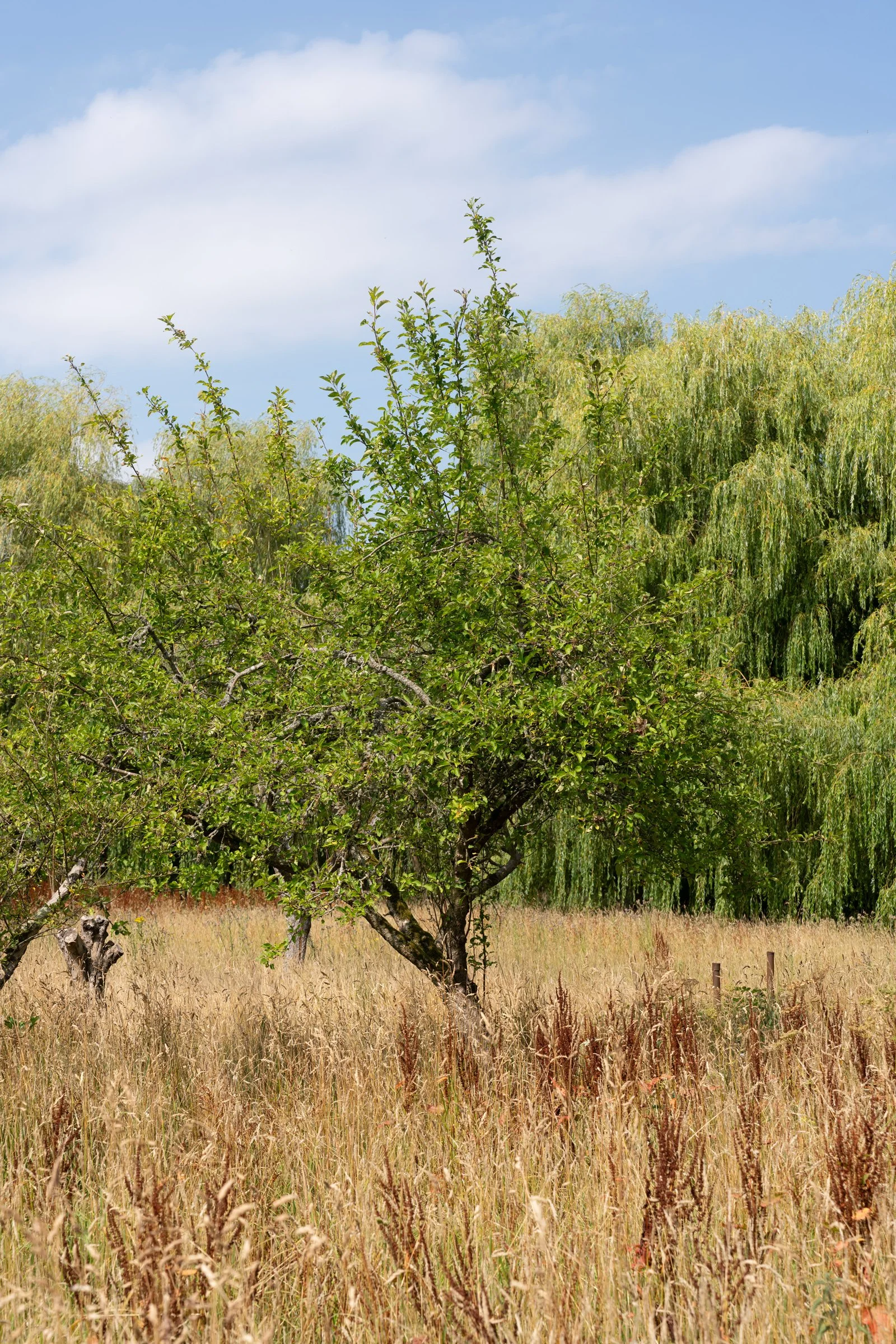
Apple (in the orchard)
Malus domestica
Old orchard apples are quiet repositories of agricultural history, and this one is no exception. At around thirty years old it is well into its productive life — full-canopied, characterful, and beginning to develop the gnarled bark and spreading form that make mature apple trees so distinctive. It may be a named variety: Cox, Bramley, or something rarer and more local. Whatever it is, it earns its place in the orchard, and with careful management it should continue to do so for decades to come.
Estimated age: 30 years | Height: approximately 3.5m
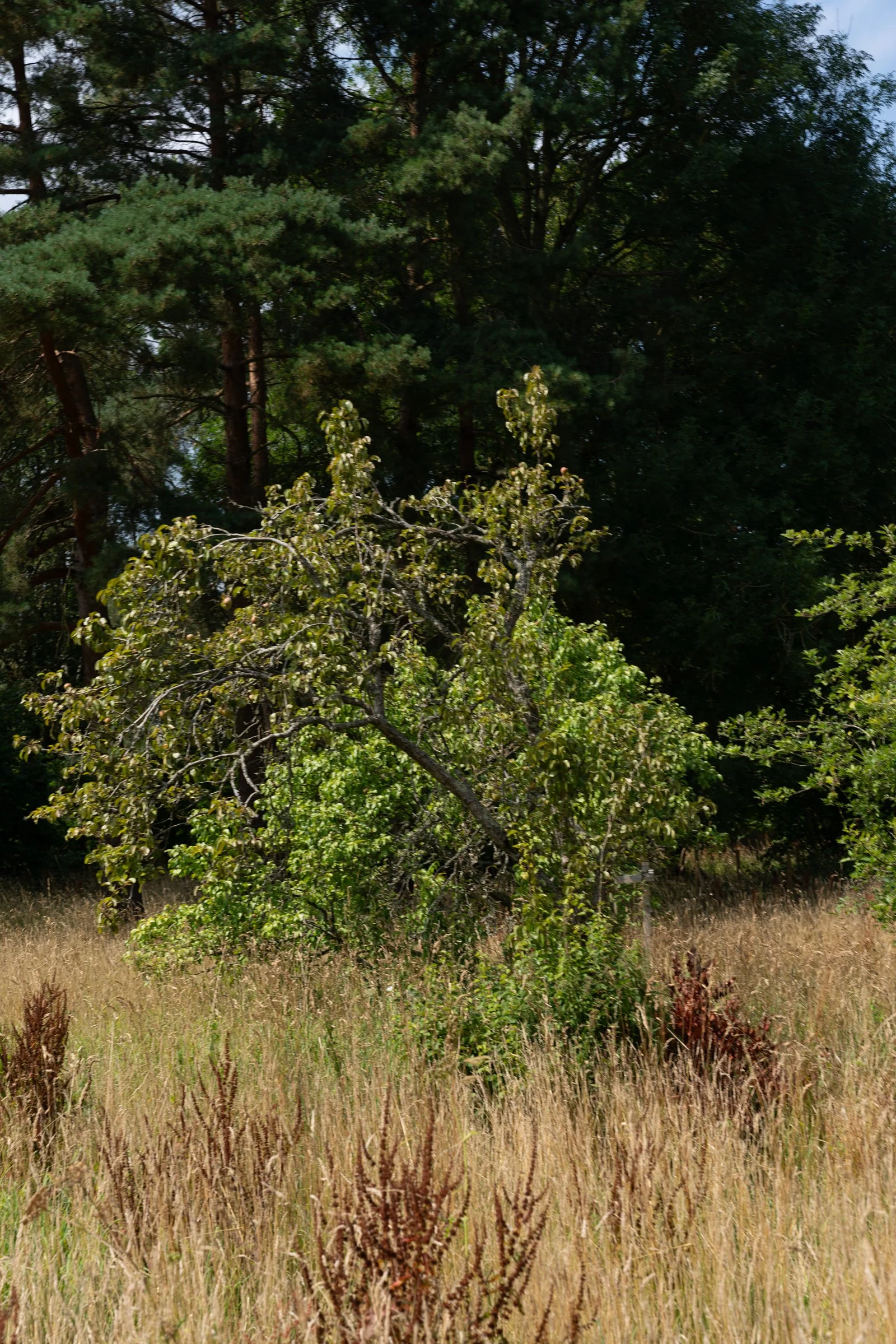
Pear (in the orchard)
Pyrus communis
Pear trees are longer-lived and less celebrated than their apple relatives, and at thirty years old this one is still very much in its middle years. It has the irregular, reaching shape characteristic of the species — less tidy than an apple, more its own thing. In autumn its fruit draws birds to the orchard. In time, as it ages and the bark deepens and fissures, it may become something quite architectural. For now it is doing what it does quietly and well.
Estimated age: 30 years | Height: approximately 3.5m
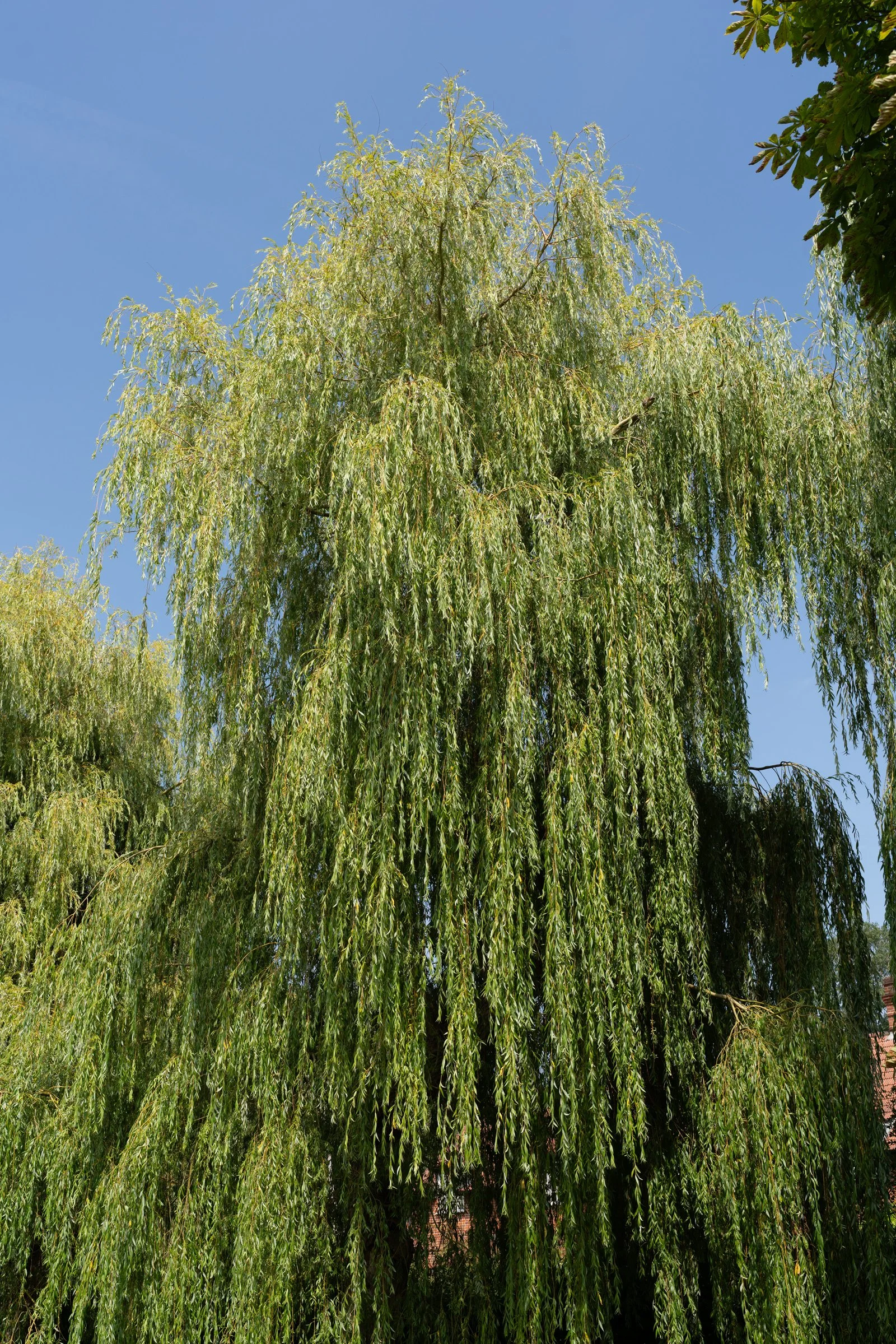
Weeping Willow
Salix × sepulcralis
The weeping willow most people picture — long curtains of pale green trailing to the water's edge — is actually a hybrid, probably of Chinese and white willow origins, that arrived in Britain in the 18th century and was planted prolifically across country estates and parkland. It is a fast grower and a heavy drinker, its roots drawn instinctively toward water, which is why you will almost always find one near a pond, lake, or stream. The roots can be vigorous enough to cause problems for nearby drainage and structures, but the tree itself, in the right position, is one of the most distinctly beautiful things in a British landscape — especially in early spring, when it greens up weeks before almost anything else.
Estimated age: 60 years | Height: approximately 14m
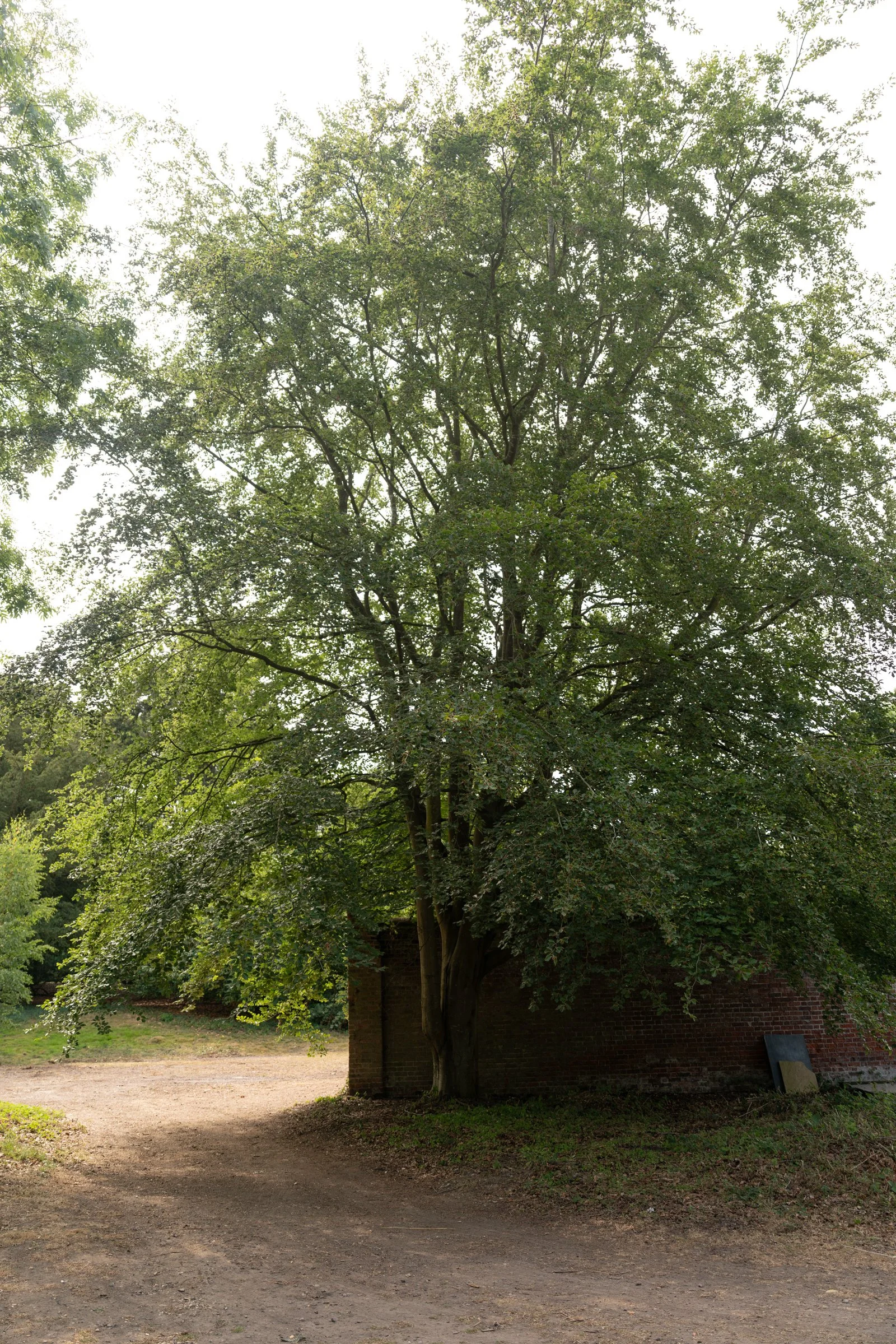
Beech
Fagus sylvatica
Beech is the great cathedral tree of the British Isles — its smooth grey trunks rising clean and column-like, its canopy closing overhead into a vault of green in summer and copper in autumn. It casts such dense shade that little grows beneath it, giving beech woodland a particular hushed, clean quality unlike any other. This is a tree that demands patience: slow to establish, slow to grow, but magnificent with age. Its mast — the small triangular nuts — can be a significant food source for woodland wildlife in a good year.
Estimated age: 60 years | Height: approximately 18m
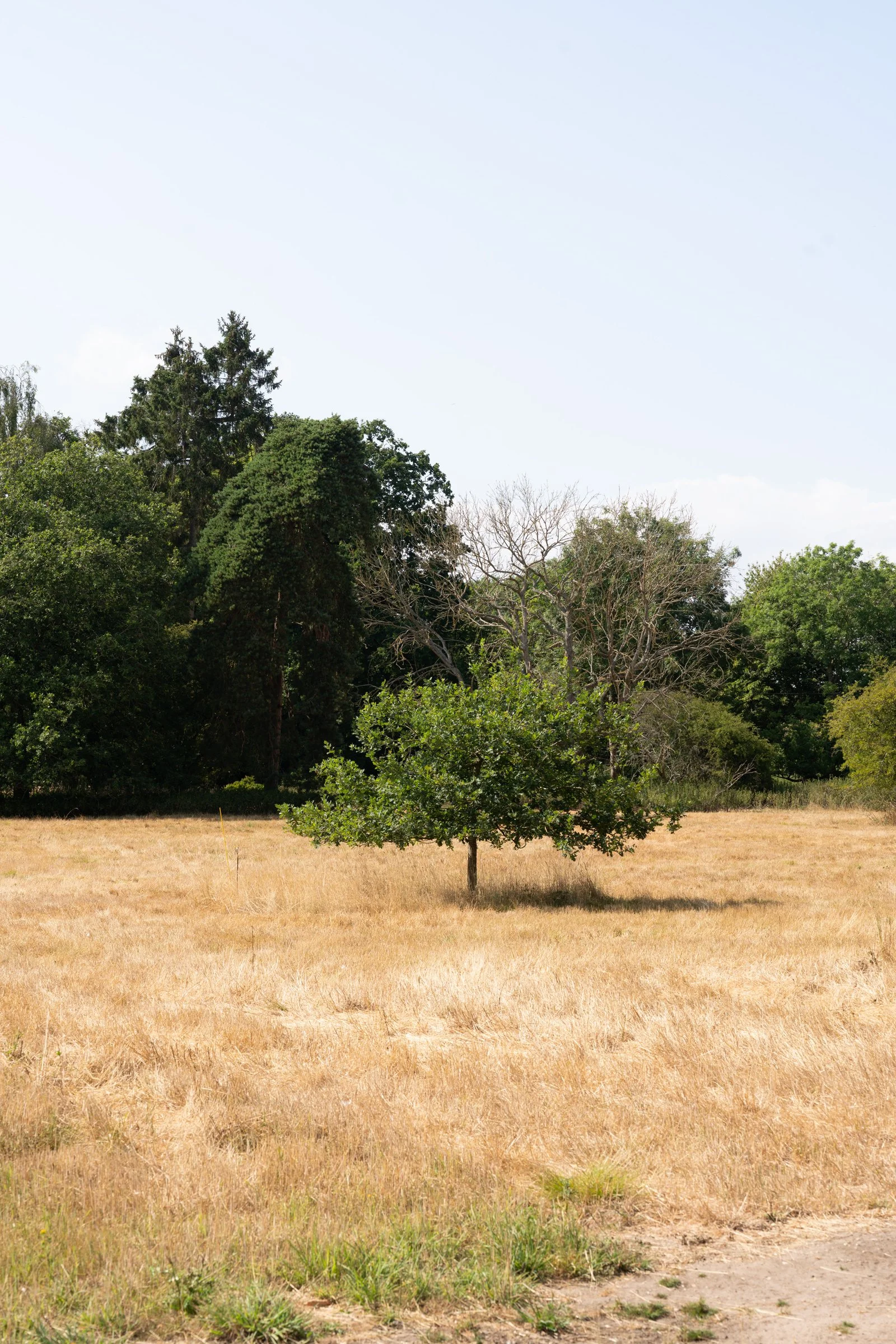
Oak (young)
Quercus robur
Nobody planted this oak. A jay — almost certainly — buried an acorn out here in the open ground and either forgot it or never came back for it, and this is the result.
Look closely at the shape of it. The canopy begins at a uniform height — the exact reach of a deer. Everything below that line has been nibbled back, giving the tree its distinctive flat-bottomed silhouette. It is an unintentional portrait of its environment, shaped as much by what grazes here as by the light it grows towards.
Given space, time, and a little luck with the deer, this self-seeded tree could develop into a broadly spreading English oak — and potentially stand here for five centuries.
Estimated age: 15 years | Height: approximately 4m
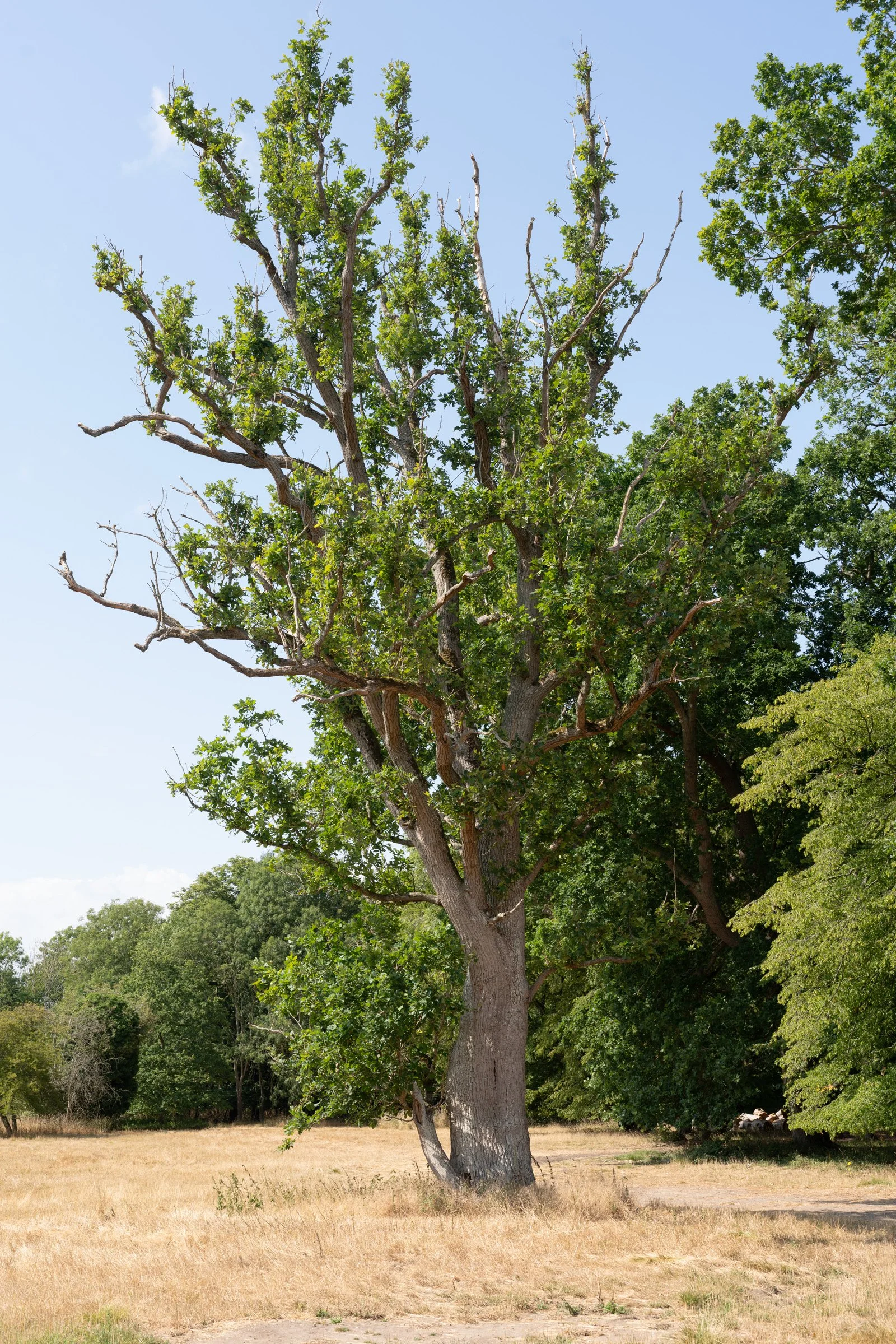
Oak (veteran)
Quercus robur
At approximately 170 years old, this oak is entering a new phase. The bare upper branches — a process known as stag-heading, where the tree gradually withdraws into itself, shedding what it no longer needs — are not a sign of failure. They are a sign of age, and of adaptation. The shoots emerging from the base tell their own story: there is still life moving through this tree.
A veteran oak in decline is one of the most ecologically valuable things an estate can hold. The dead and dying wood supports over 2,300 species associated with oak alone, hundreds of which depend specifically on decaying timber. What looks like deterioration is, to much of the wildlife here, an opening.
The intention is to protect it — to leave the deadwood in place, to guard the root zone, and to remove only what is genuinely dangerous. This tree has 170 years of history in it. With the right care, it has more still to give.
Estimated age: 170 years | Height: approximately 15m
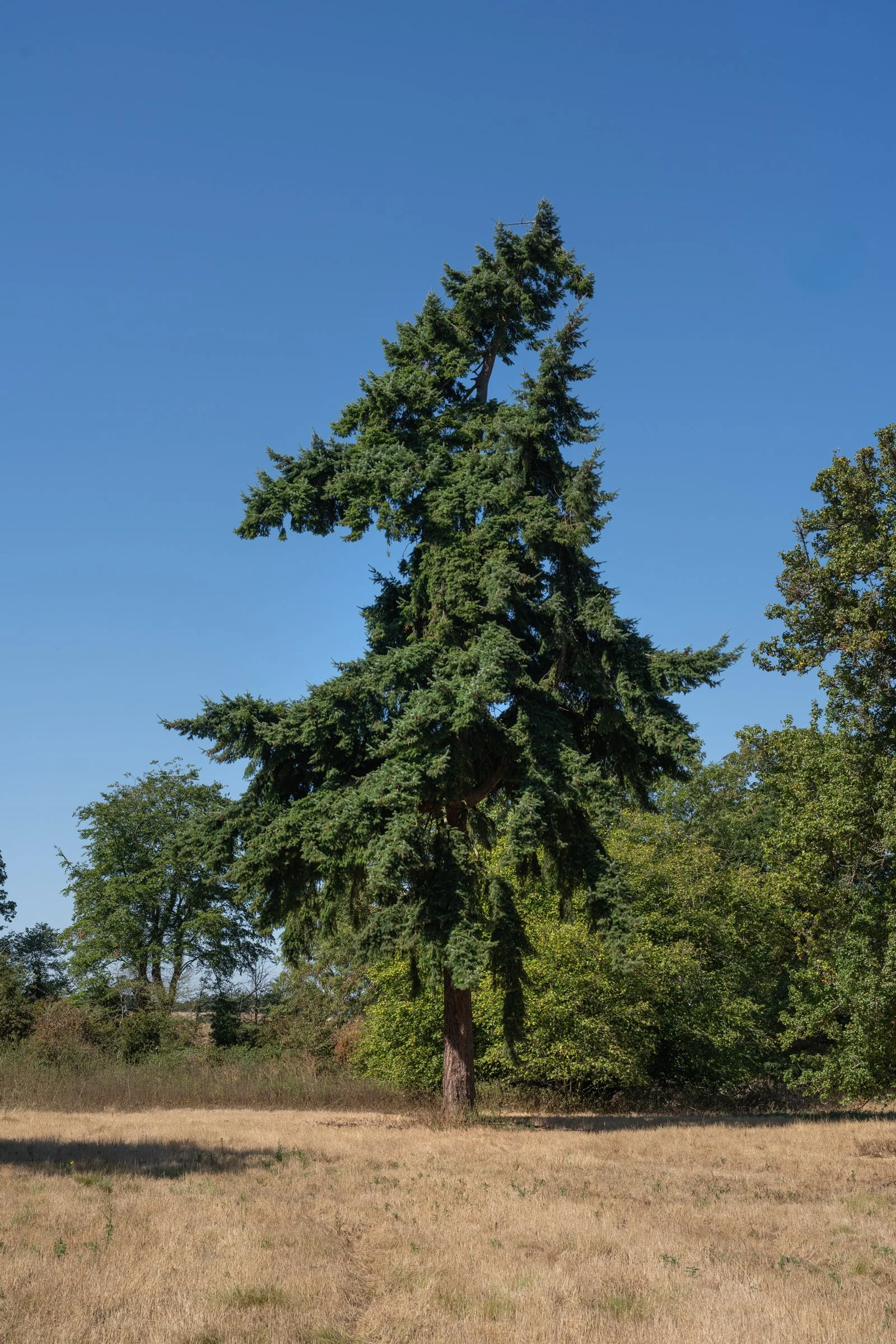
Douglas Fir
Pseudotsuga menziesii
Not a true fir, despite its name — the Douglas fir sits in a genus all of its own, native to the Pacific coast of North America and introduced to Britain in 1827 by the Scottish botanist David Douglas, after whom it is named. It became one of the most widely planted conifers on British estates in the 19th and 20th centuries, valued for its rapid growth and excellent timber. In the right conditions it can become the tallest tree in Britain — several specimens exceed 60 metres. The soft, slightly sweet-smelling needles and distinctive cones with their three-pronged bracts make it easy to identify once you know what to look for. An impressive tree, and a reminder that some of the grandest things in this landscape arrived here as someone's experiment.
Estimated age: 150 years | Height: approximately 30m
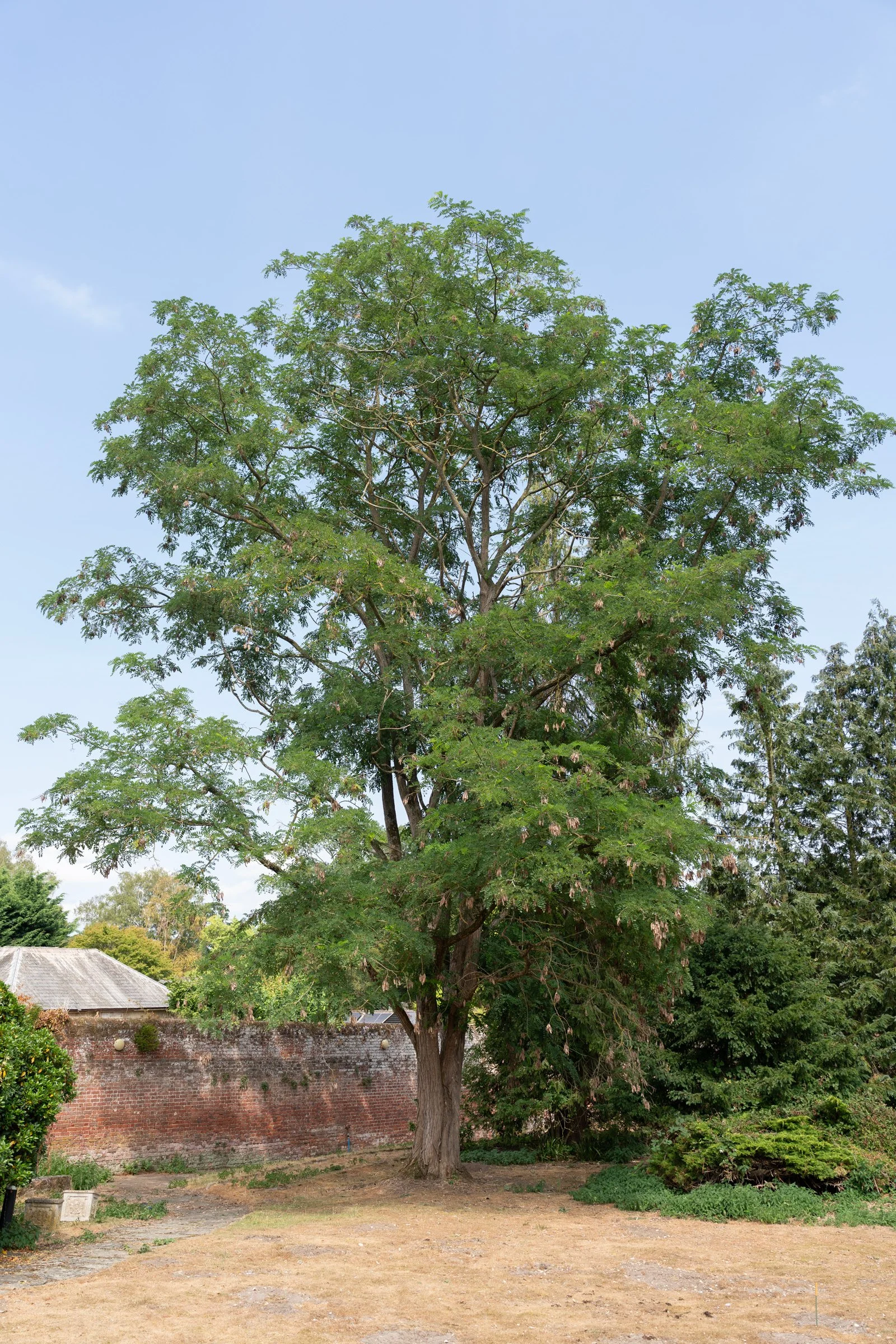
Black Locust
Robinia pseudoacacia
The black locust is a tree that rarely announces itself quietly. Native to a small region of the Appalachian mountains in North America, it was introduced to Europe in the early 17th century and has since spread — sometimes aggressively — across much of the continent. It fixes nitrogen, which means it changes the soil chemistry around it; it produces dense, rot-resistant timber that lasts in the ground longer than almost any other; and in late spring it covers itself in hanging clusters of white blossom that smell extraordinary and are among the best sources of nectar in any garden or estate. A complicated tree, ecologically speaking, but a beautiful one — and in a managed setting like this, one that earns its place.
Estimated age: 100 years | Height: approximately 18m
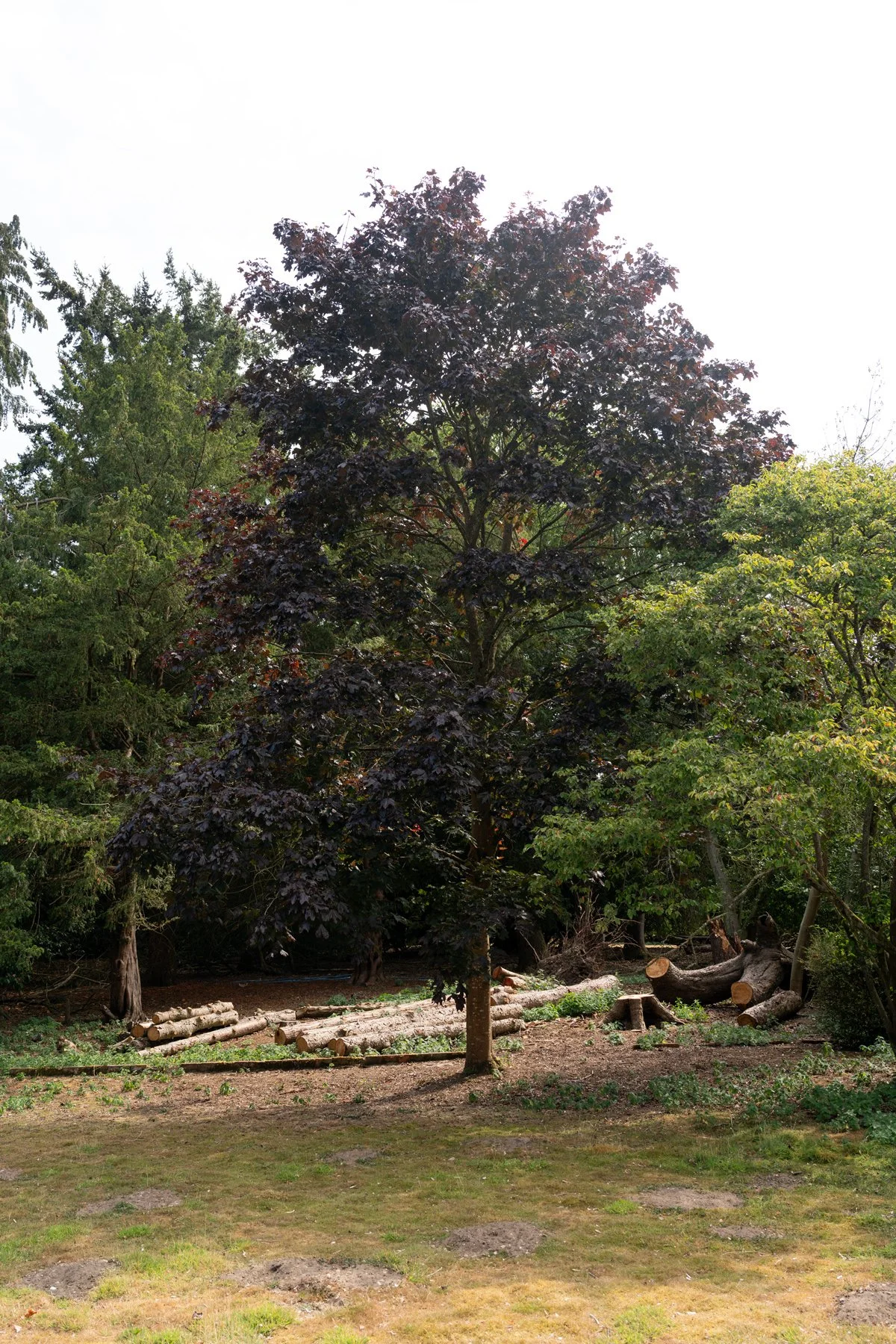
Crimson King Maple
Acer platanoides 'Crimson King'
One of the most recognisable ornamental trees in the British landscape, the Crimson King maple earns its place through sheer consistency — its deep burgundy-purple leaves hold their colour from the moment they unfurl in spring right through to the russet tones of autumn, providing a reliable counterpoint to the greens around it. It is a cultivar of the Norway maple, selected for its striking foliage and planted widely across parks and estates from the mid-20th century onwards. Bees are strongly attracted to its flowers in early spring, and its winged seeds — the classic helicopter seeds of childhood — are produced in abundance. Modest in scale compared to its neighbours, but no less useful for it.
Estimated age: 25 years | Height: approximately 12m
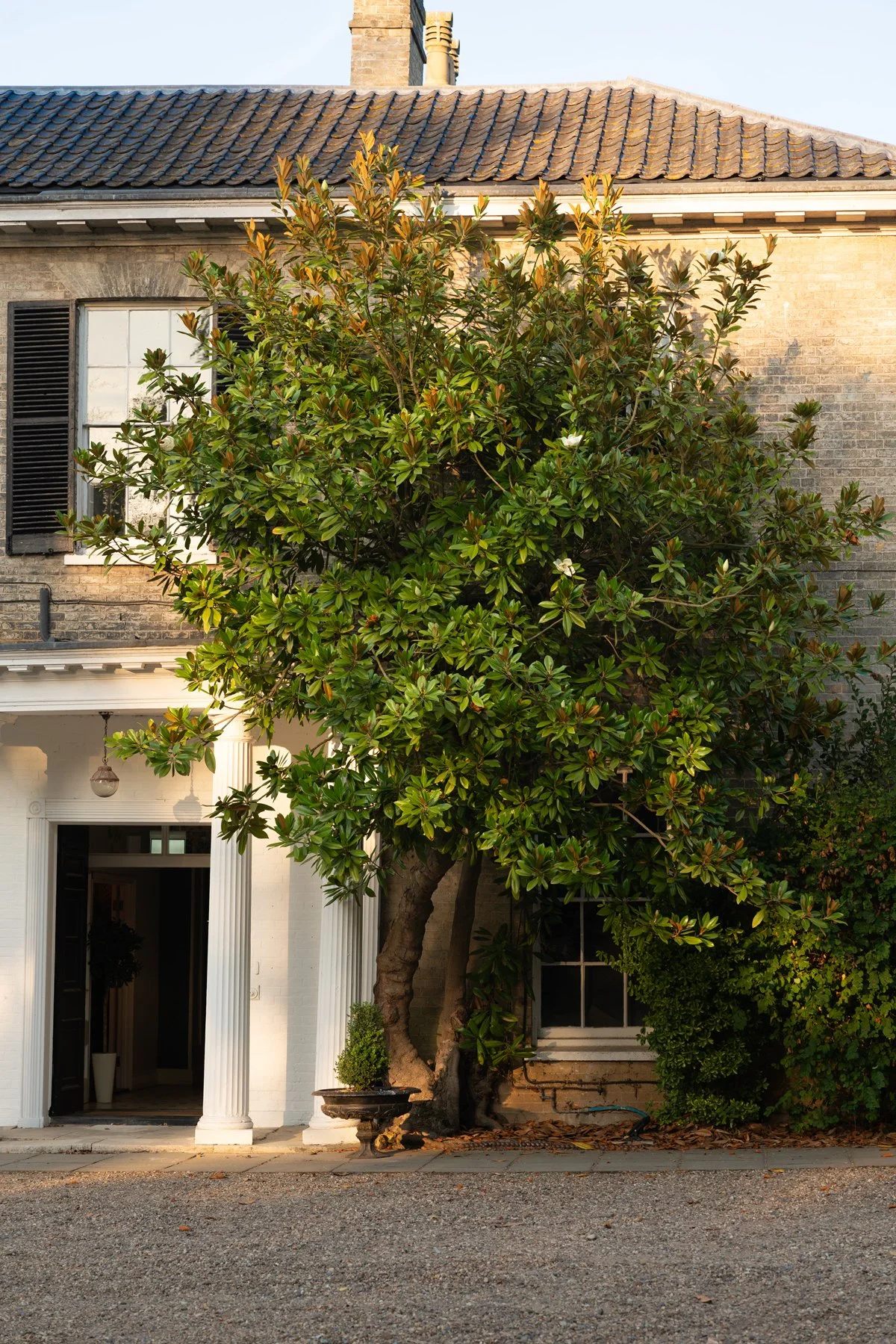
Magnolia
Magnolia grandiflora
Few things make as immediate an impression at Caistor Hall as this magnolia, which has grown so large it now shares the entrance with the building itself. Magnolia grandiflora — the Bull Bay — is an evergreen species from the southeastern United States, introduced to Britain in the early 18th century and traditionally planted against south-facing walls of country houses where it could benefit from the reflected warmth. This one has long outgrown any wall. Its flowers, when they come, are among the largest of any hardy tree in Britain — creamy white, faintly fragrant, and brief.
There is, however, something worth noting. The roots of a tree this size, this close to a building, exert considerable pressure over time — the lifted paving at the base of the entrance is early evidence of that. It is something we are monitoring carefully as the restoration work progresses.
Estimated age: 150 years | Height: approximately 10m
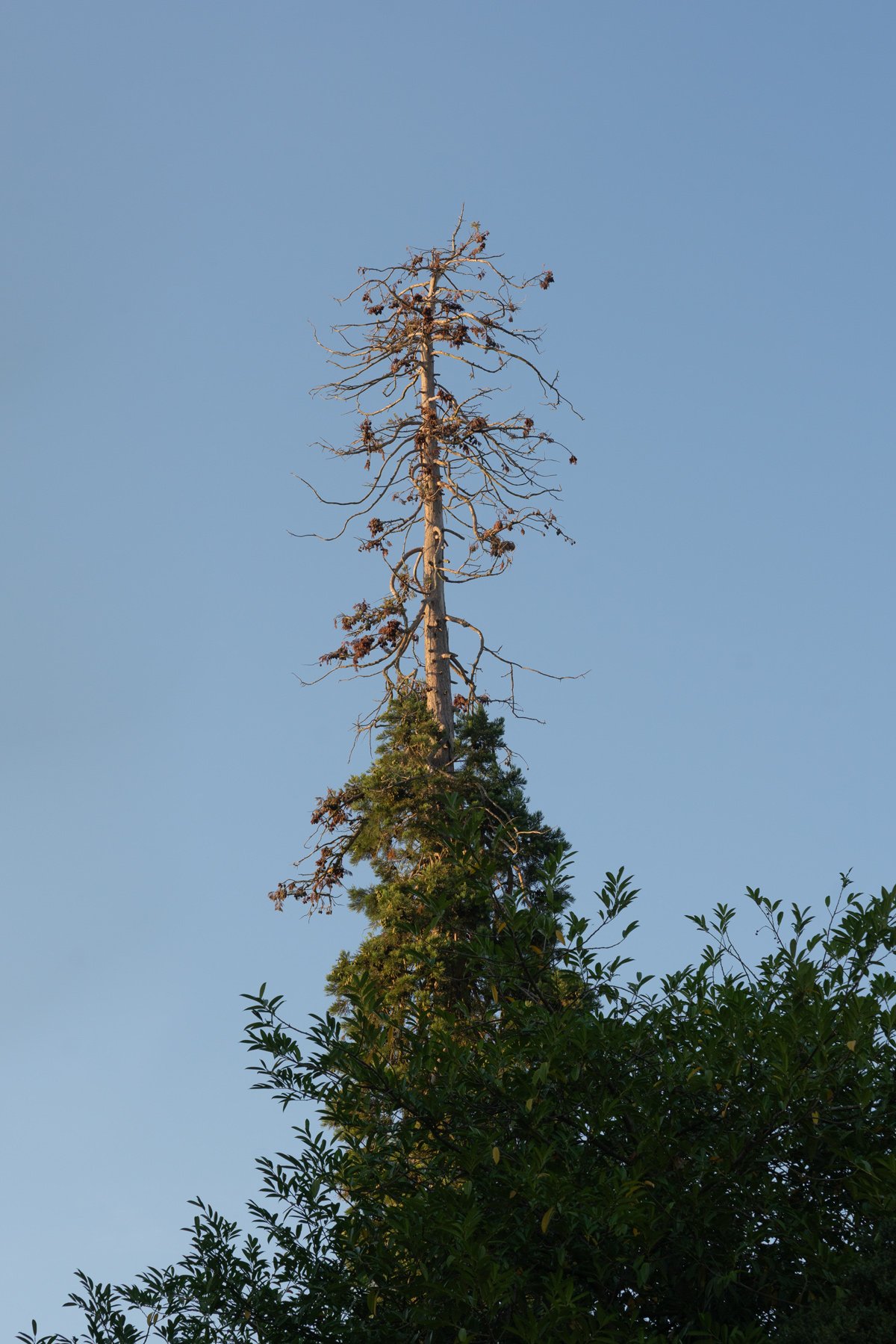
Giant Redwood
Sequoiadendron giganteum
The Giant Redwood — also known as the Wellingtonia — arrived in Britain from the Sierra Nevada mountains of California in the 1850s and was planted prolifically across Victorian estates, often as a statement of ambition and novelty. In its native range it is the largest tree on earth by volume, capable of living for over three thousand years.
This one bears the marks of a lightning strike — a violent but not uncommon fate for the tallest tree in any landscape. It draws the storm to itself. The bare, bleached crown and pattern of dead wood in the upper canopy are consistent with that kind of event, but what remains below the point of impact is very much alive. A tree of this species has considerable resilience, and its story here is far from over.
Estimated age: 100 years | Height: approximately 30m